
The east coast of Iceland offers sea views and winding drive through several villages. Djúpivogur is first on the list. Previously on my trip in Iceland, I had encountered a small place showing animal bones and semi-precious stones. I had found that place again, only to discover that it closed a few years back. One of my goals for the trip was to find some Icelandic spar. There is another place in Djúpivogur – Auðunn’s Stone & Mineral collection. However, it was a Sunday and the entire town seemed closed (except maybe the cafe).
We drove on to Stöðvarfjörður. There is another stone and mineral spot called Petra’s Stone Collection. It was also closed, people were still working though, performing maintenance it seemed. After a brief stop at the Saxa Sea Geyser, we continued winding north.
An attempt to stop for lunch in Fáskrúðsfjörður was thwarted as the only supermarket was closed. A family gathered around an ice cream truck as we left the town.
We eventually rolled into Egilsstaðir. We headed to the hotel, Hotel Eyvindará, which was surrounded by a small woodland. Shortly, into the drive at the start of the day, it was discovered that one of my cards was missing from my X-T4. I emailed the hotel, but the response that it wasn’t found. About two days worth of photos had evaporated. After chilling out for a bit. We decided on an early dinner and then head out to the Vök baths. After some nice pizza at Askur and a short walk, we headed out to the Vök baths.
Vök boasts that its geothermal water is certified as suitable for drinking in Iceland. The facilities are first-class, with wristbands to control the lockers for your things and as a means for paying for drinks. There are three separate pools, 37-38℃, 39-40℃ and 41℃. And you can hop in the lake for a shock of cold water before scrambling back into one of the heated pools.
After a couple of hours and sufficient pruning up, we returned to the hotel.
Myvatn
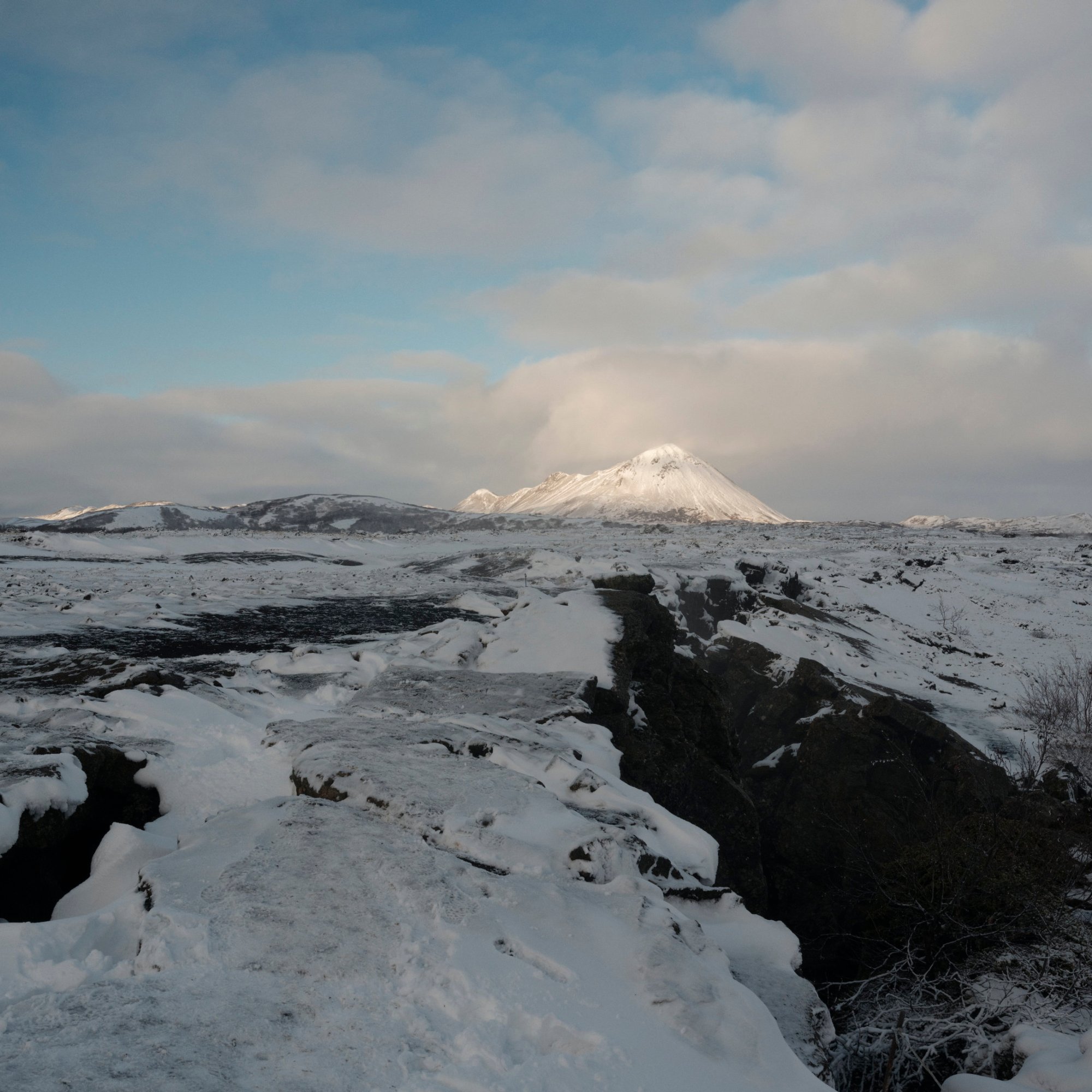
The road takes us west. The highlands around us are white-capped with ice. Over the course of an hour or so, the road rises up to meet and rise above that snow line. Everything is layered in white. Tourists, even us, find a safe place to stop on the side and take photos. The snow is a thin sheet, but it’s enough to make a dramatic difference.
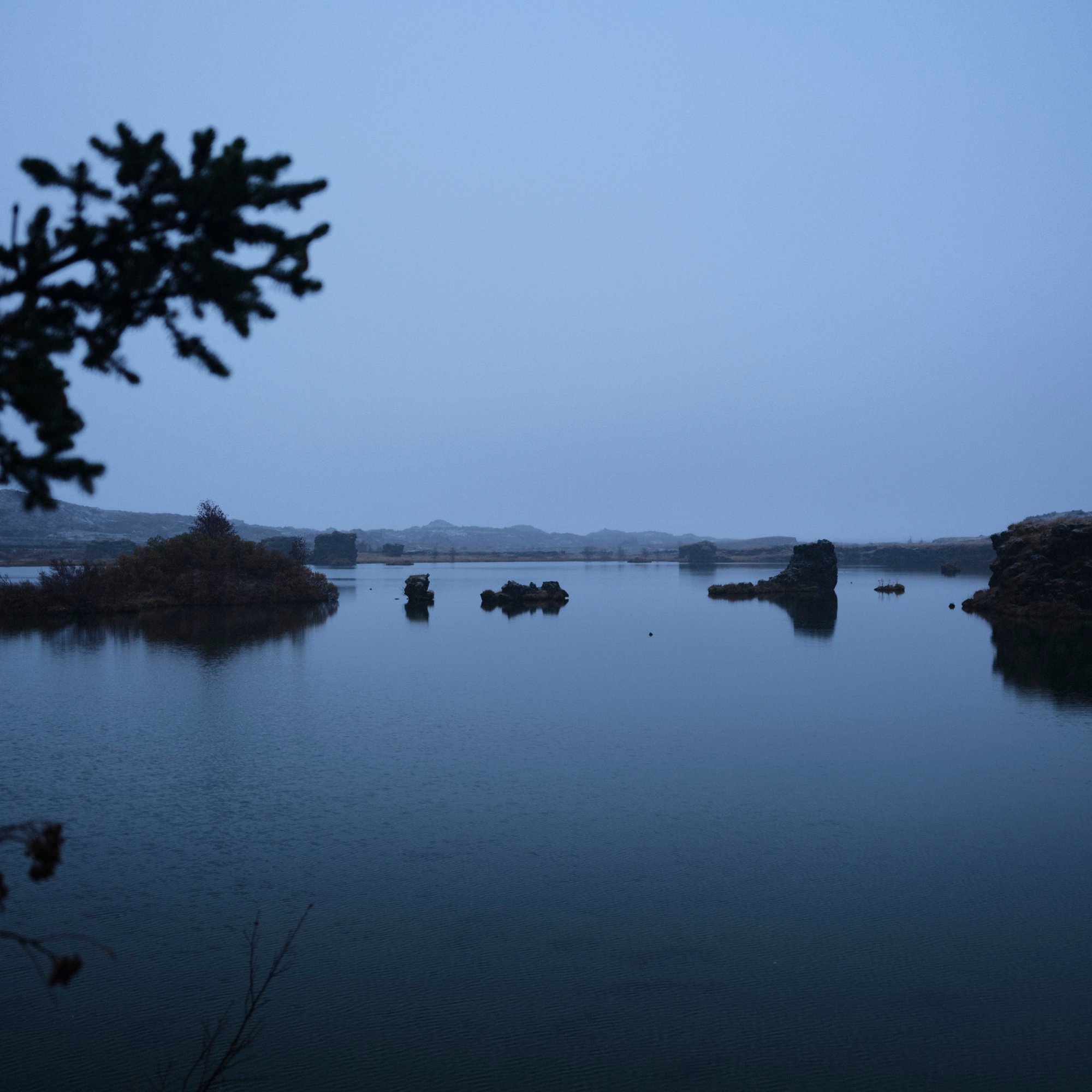
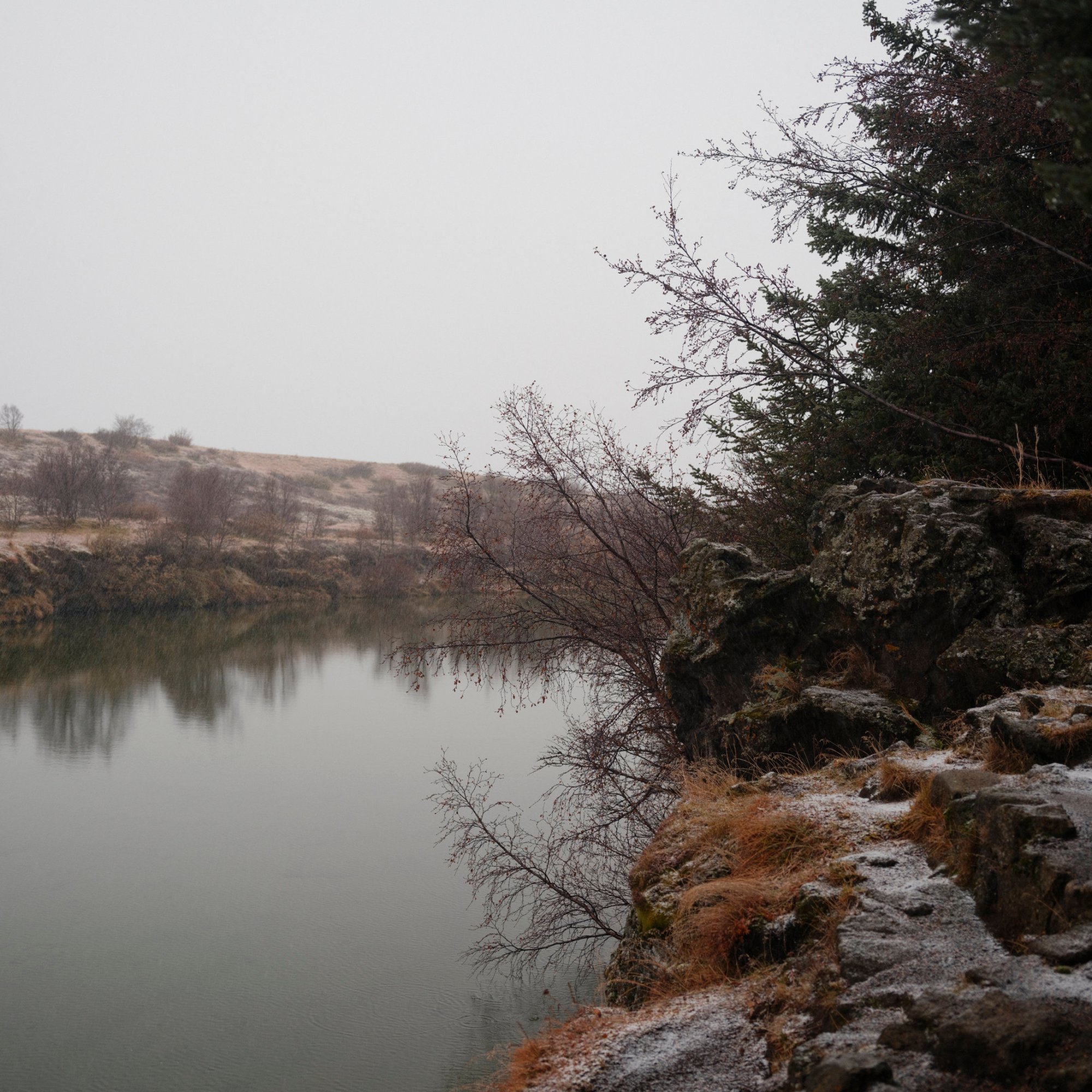
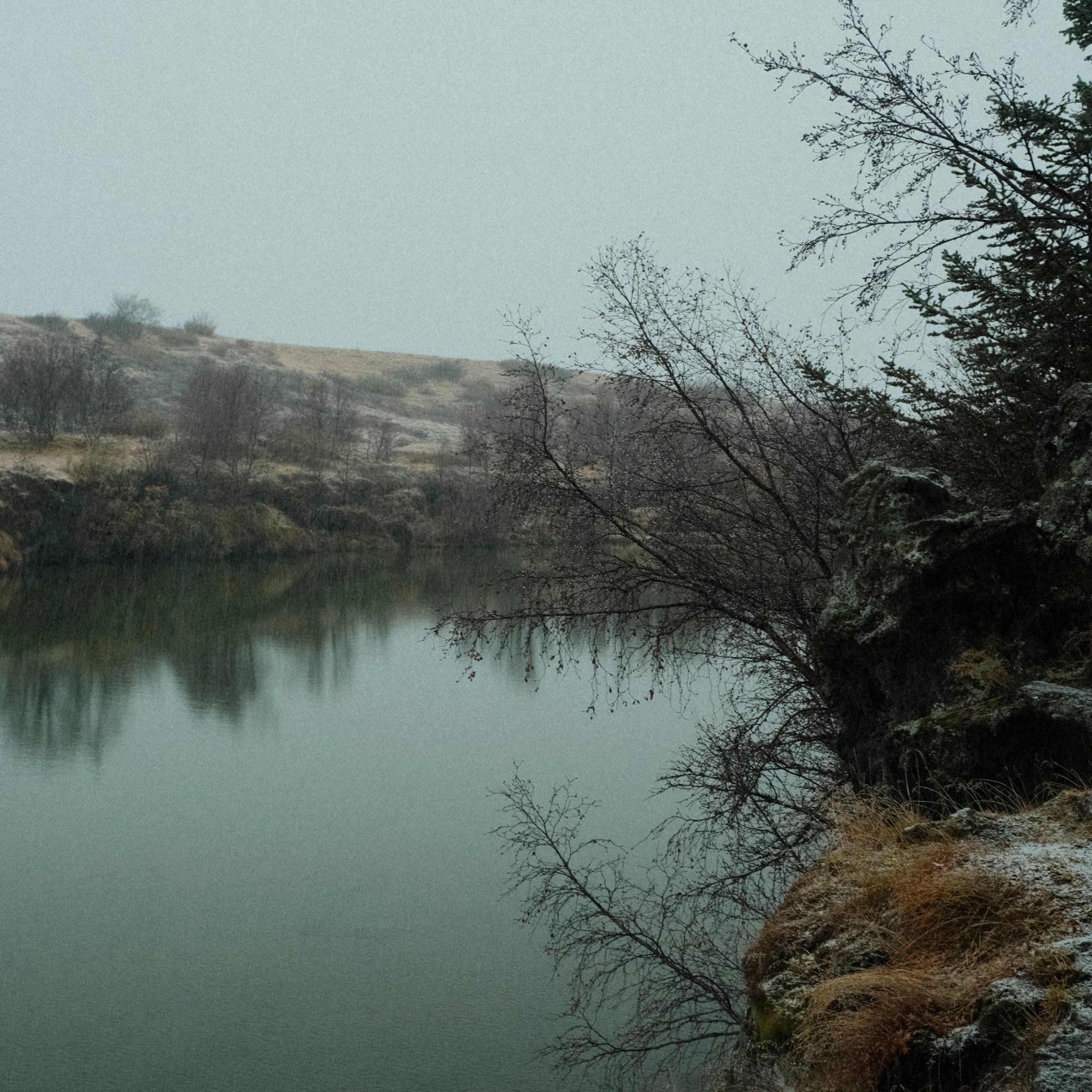
We took a brief stop at Beitarhúsið for a quick bite and then continued on to Reykjahlíð. Reykjahlíð is a village on north eastern side of the lake. Our accomodation, Laxá Hotel was on the opposite side of Lake Mývatn. We take the loop around to drop off our bags and briefly explore the area. Down the road from the hotel was the Mývatn Visitor Centre, which was half-closed due to renovations/upgrades. Within walking distance was Skútustaðagígar, a series of pseudocraters that look like pockmarks from the satellite view. The path around the various craters was a mix of ice and muddy slush. Parts of the neighbouring pond, named Stakhólstjörn had appeared to be frozen. Signs read not to walk on the ice, or attempt to crack or break it. Next was Höfði nature preserve, a small forest that stands out from the surround area of lava fields, sulphur smokers and craters.
Not wanting to spend a lot of money on a dinner that the hotel restaurant was offering, we decided to have fish and chips back in the village, after taking a look at the local convenience store/supermarket.
The next day, there was more snow. Staff had shovelled it away from the entrance. While I had breakfast, I watched some tourists make a squat snow man, decorating it with salad items from the breakfast buffet.
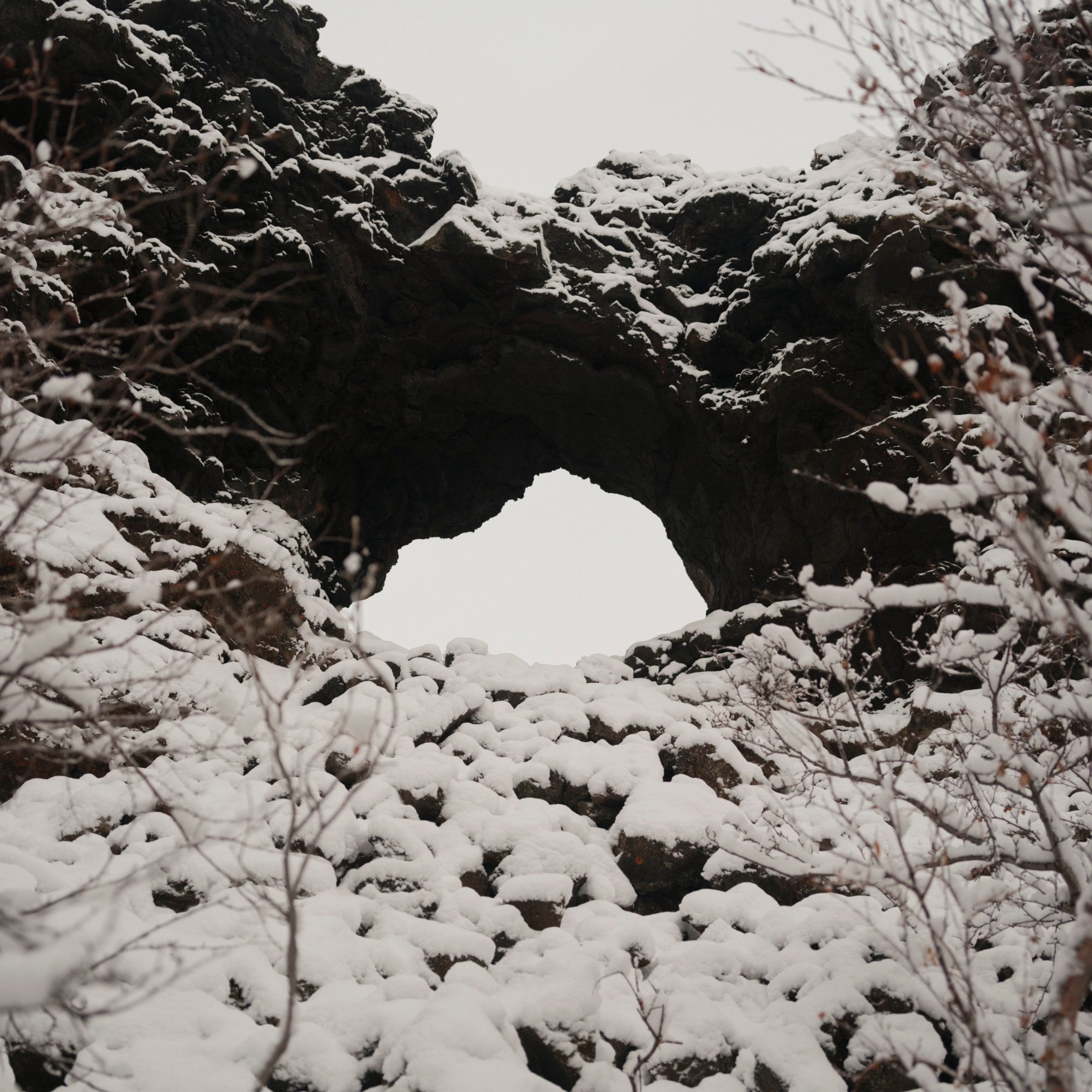
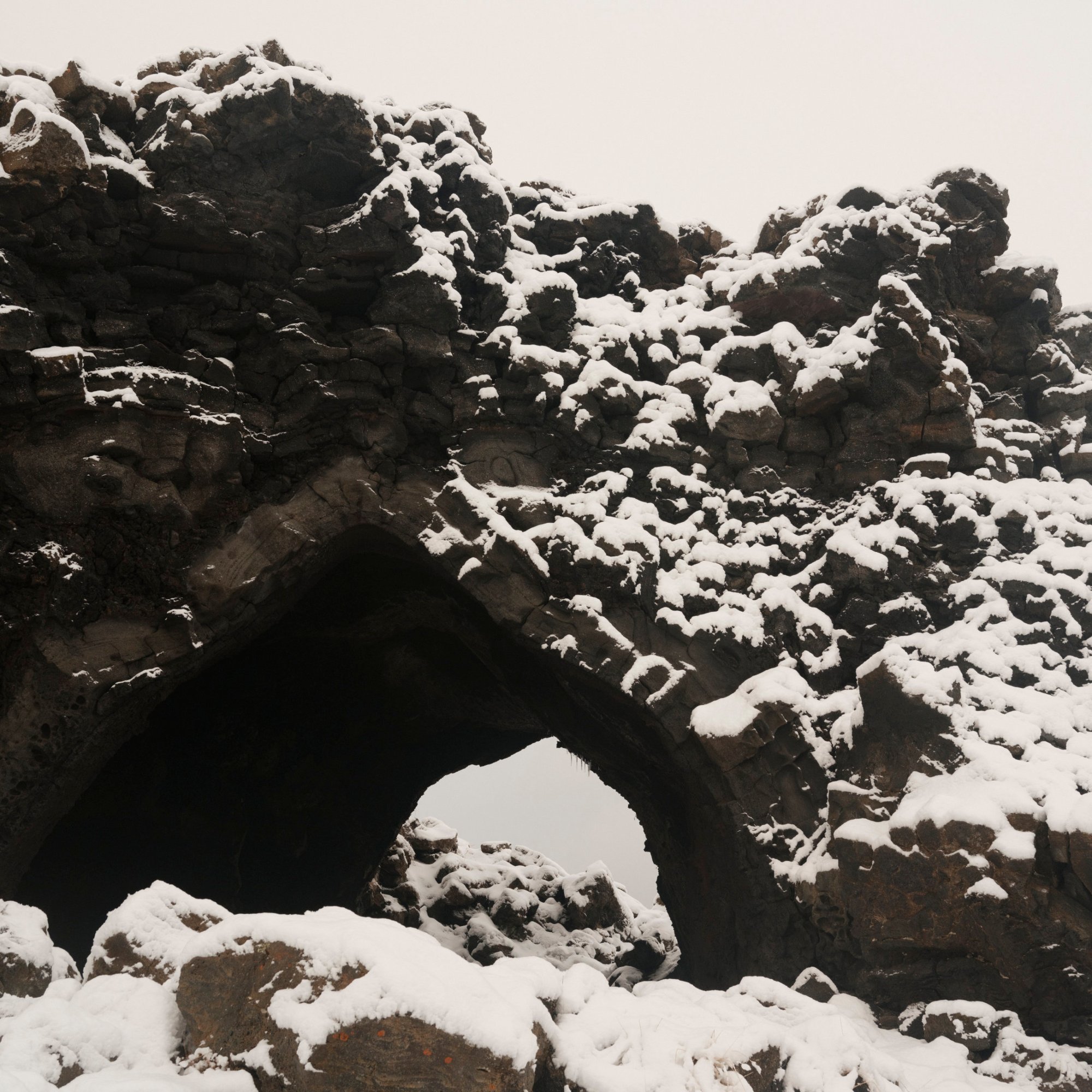
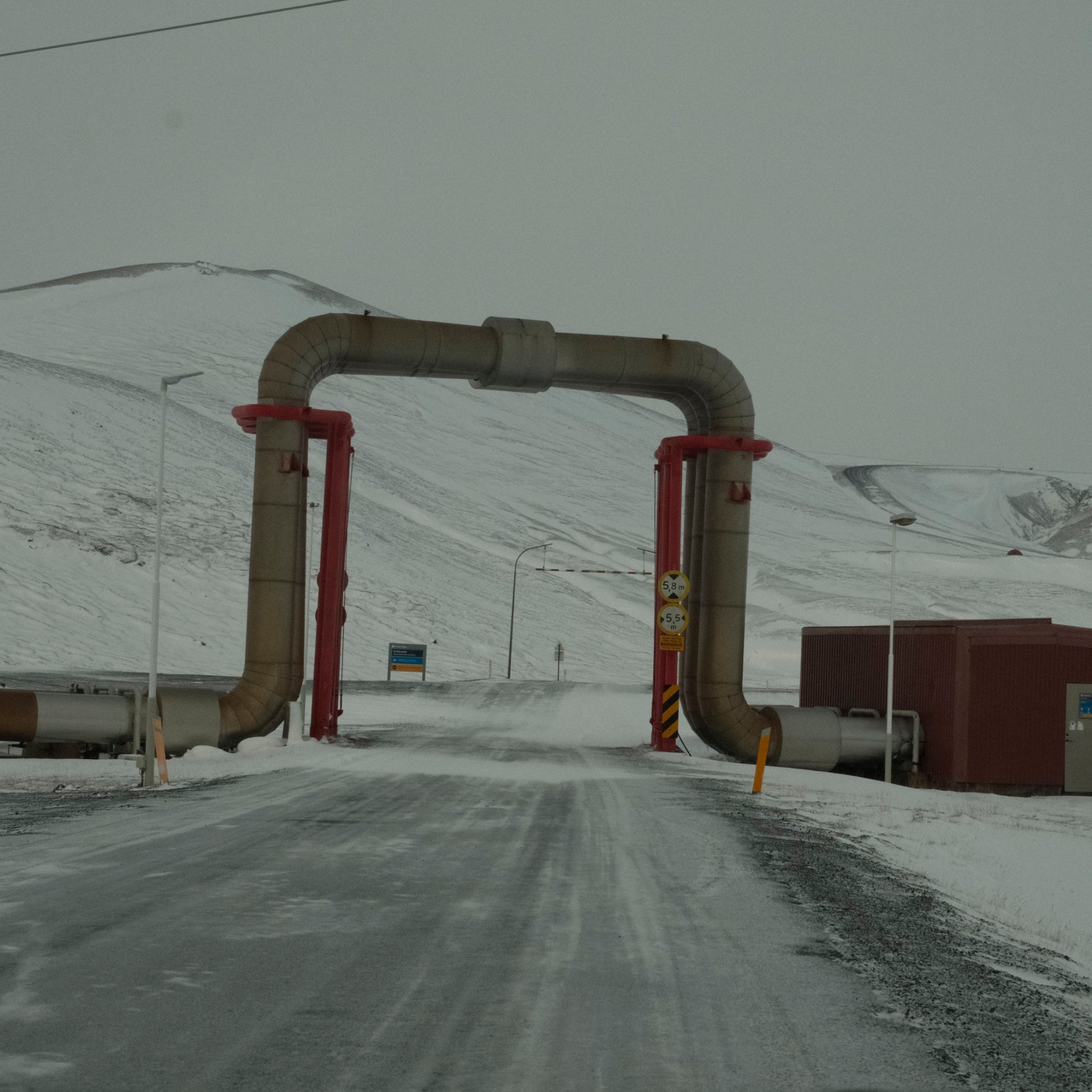
We planned out our day, Dimmuborgir – dark castles is a unique field of lava cave and tubes. All of its dark stone is coated in a layer of white. Parts of path have iced up, making the walk treacherous at points (especially if you’re carrying expensive camera gear). The cafe outside of the park is filled with tourists there for a guided meal. We drove along the lake and stopped into a place that served pizza. After that, we went to check out the Krafla volcanic lake, with its green-blue waters. But the road was closed beyond the decommissioned geothermal plant, so instead we went to Hverir with its boiling mud and sulphuric smokers. I met a french photographer who was sending video to her daughter back in France. The area stank from the cold air filtering everything but the worst smells. And then a climb up the Hverfjall volcano to get the view in the last slices of daylight, and then get back down the mountain before the night began. There was no lights in the mountain or the park. It was best not to stick around and descend a mountain blind.
The Myvatn Nature Baths are a series of geothermally heated pools, lined with sand and gravel and milky-blue alkaline water. While the pools were quite large, one of them felt almost tepid in temperature. The other change and showering facilities seemed dated when compared to the Vök Baths. After a couple of hours and sufficient pruning, we got changed and had some goulash from the quiet cafe. We killed some time in the hotel and then went to bed.












 The Screaming Wall
Leave a comment