
So the Mamiya RB67 I obtained last year turned out to have a problem in the lens not closing at certain shutter speeds. Which is frustrating as I was thinking of getting some long exposure shots out of it. As I’m not certain of anyone fixing it in town, I have to wait for a time to get it to Sydney and into the hands of a camera repair guys to fix it. Or spruik for a new lens. Obviously this means one thing: endlessly agonise over a new purchase.
Last year, I missed the opportunity on eBay purchase of a Fuji GF670 from Japan. I slept on it as I was heading to Europe and thought it could wait. Then there was a new US president, a trade war and maybe some people watched a certain video of a certain Leica guy, which I also watched, touting the positives about the camera. So instead of being two-k, it was now three. Now they are five.
I spent my off hours, or in between loading screens at work, looking at medium format everything. I could buy an old Mamiya 645 lens, get an adapter and twist that on the GFX. Or I could purchase a Voigtlander Bessa II, which is the predecessor of the Fuji GF670. Or I could get a Hasselblad 500CM. Or a whole new Mamiya RB76. Or the Texas Leica that is a Fuji GW690. On and on and on.
But there was one camera I did keep thinking about. And it was in a video, where an old dude talked about his ‘forever camera’. Despite being designed to be modular, only one lens was ever produced for it. It uses graflock 23 backs. It has no viewfinder, only a sportsfinder. This is the Horseman Convertible.
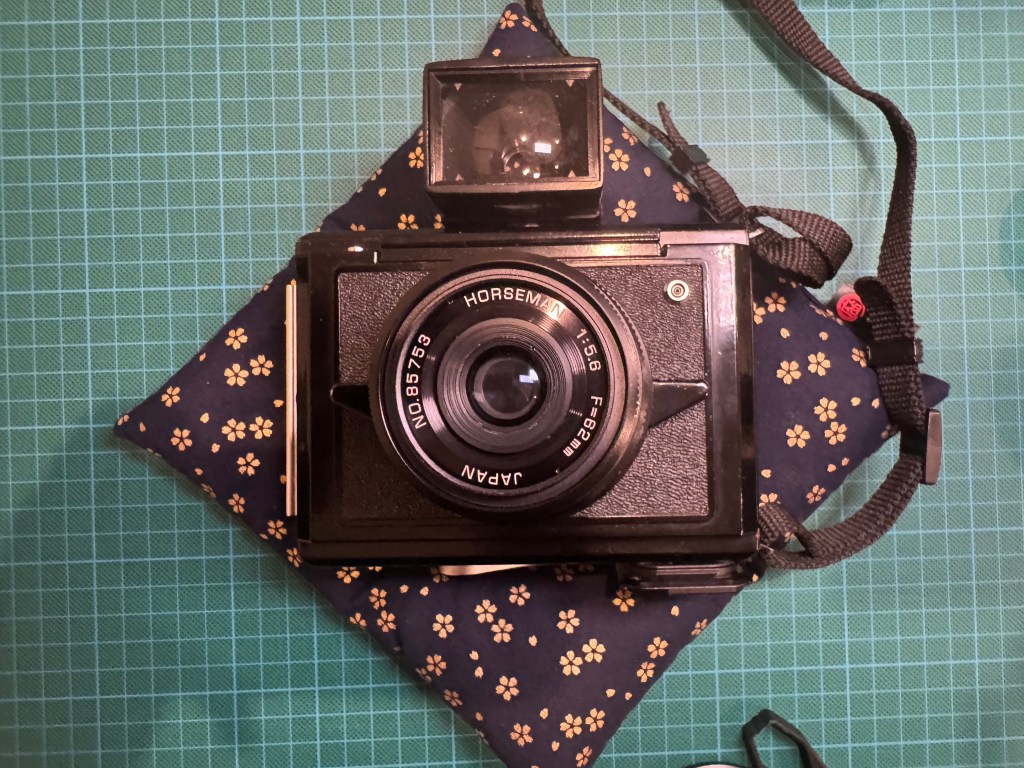
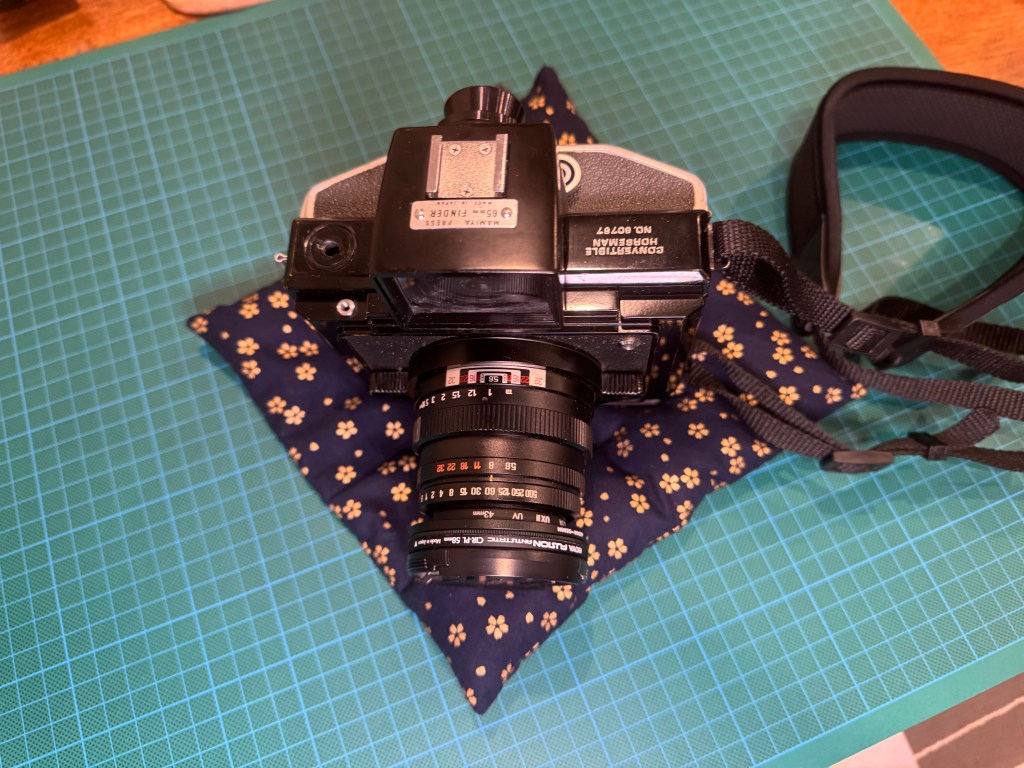
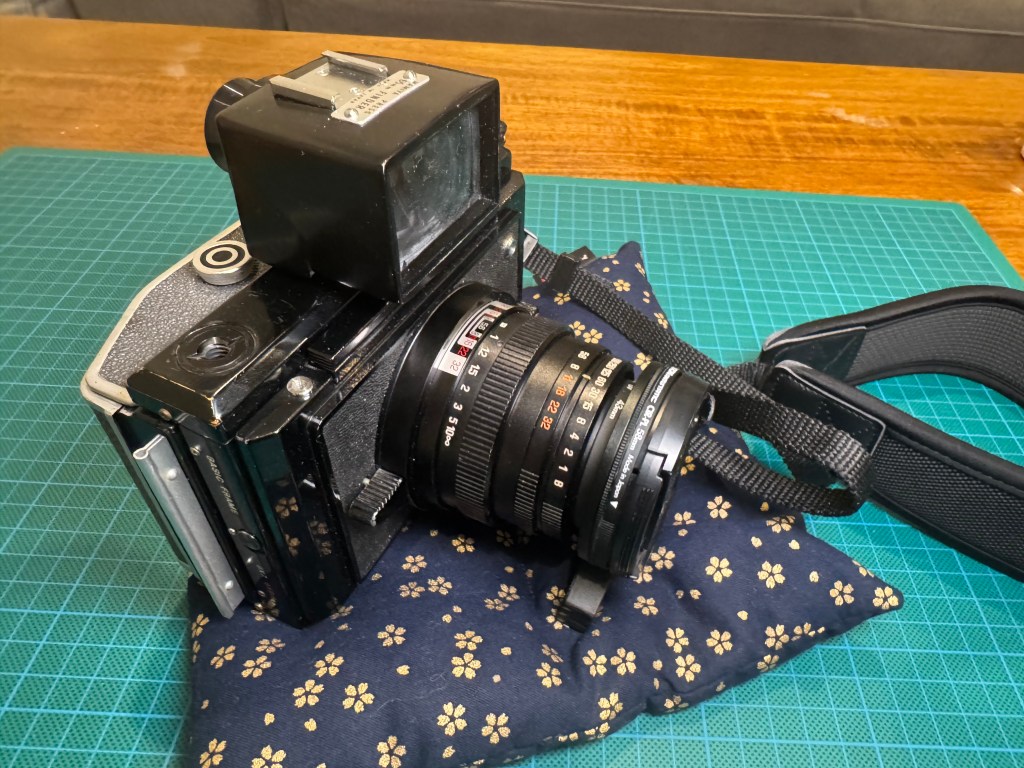
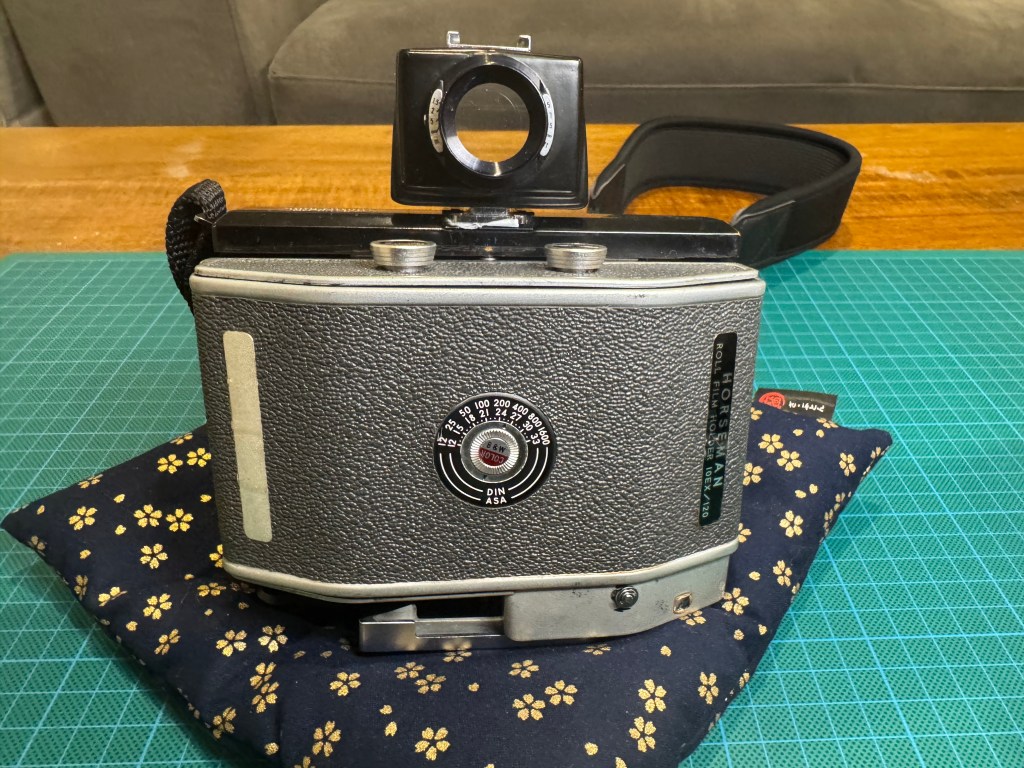
Made in the seventies, this model of camera is a small frame-like body, where a lens on a board clips to the front and a film back is on the rear. There was only one lens produced for the system1, 65mm f5.6-32 lens, which is about equivalent to 23mm(?) in 35mm film. The back is apparently compatible with Graflock 23 backs, and Horseman produced a 6×7 and a 6×9 run of film back to suit. So you can take 8 or 10 exposures in medium format. There is no focusing screen or dedicated viewer finder, only a collapsible wire sportsfinder. So it’s all zone focusing. But this makes it one of the smaller medium format cameras around, with a wide lens. It’s about a third of the size of my RB67. As both the film back and lens are not mechanically coupled, they must be operated independently. The lens has two triggers, one to prime the shutter, and the other to fire it. The film back has a darkslide that needs to be removed, before taking a photo, and when a successful exposure is made, a switch must be flicked to unlock the winder to roll to the next frame. This presents a feature not seen in many cameras – it can be used to take double exposures. I have yet to experiment with this. Maybe soon.
I ran a test roll through and a few of the shots turned out okay. I have yet to take the time to scan them in, so the effort for this was to photograph them on my phone and quick airdrop to my iPad and the copy of affinity photo there.
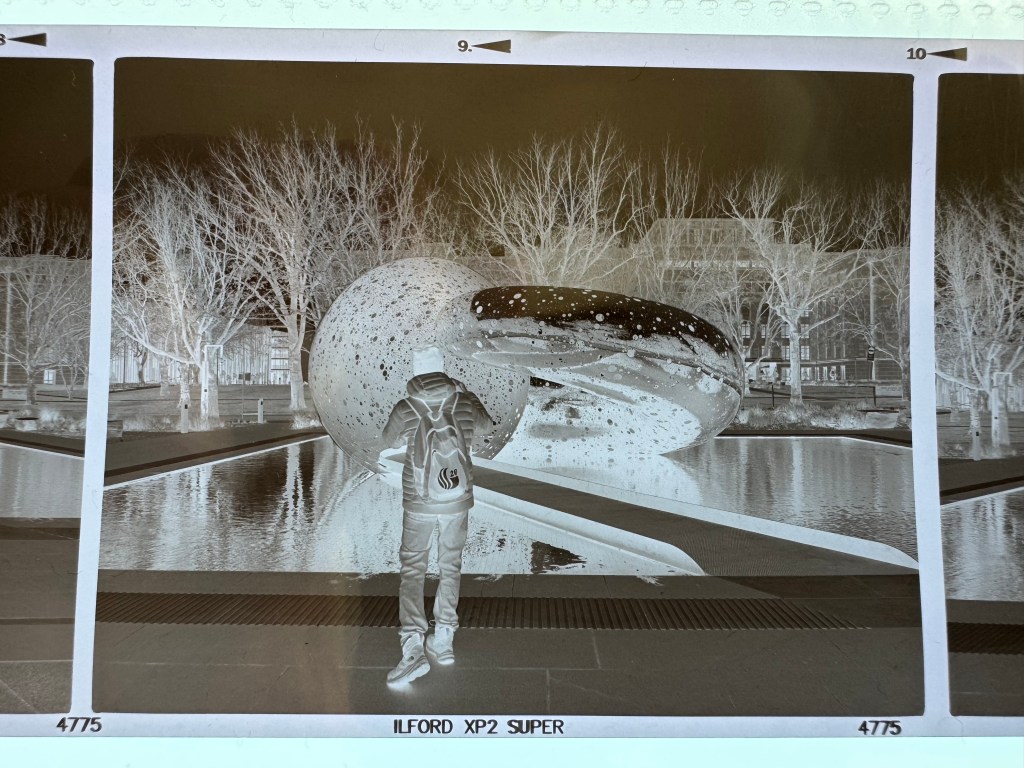
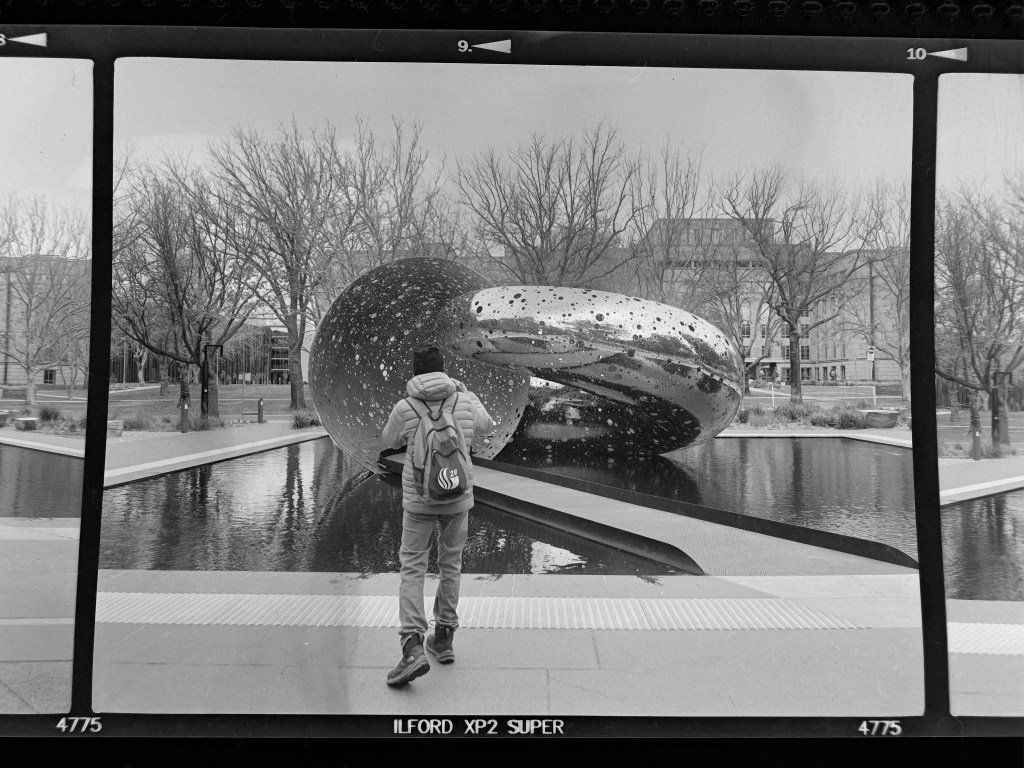
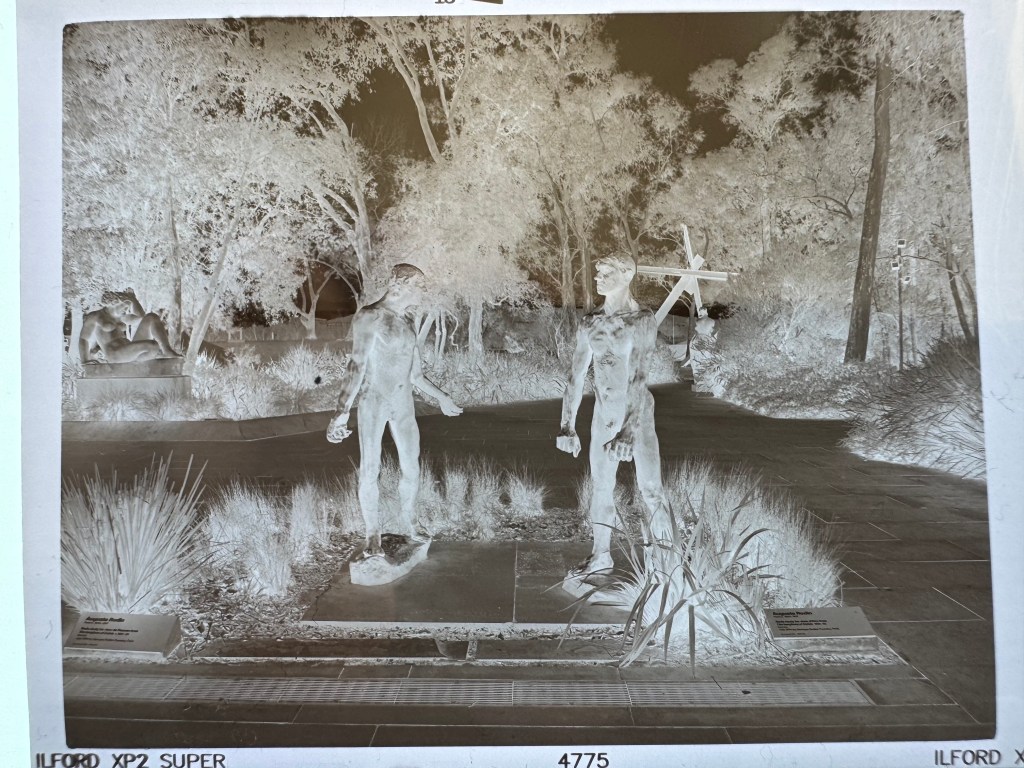
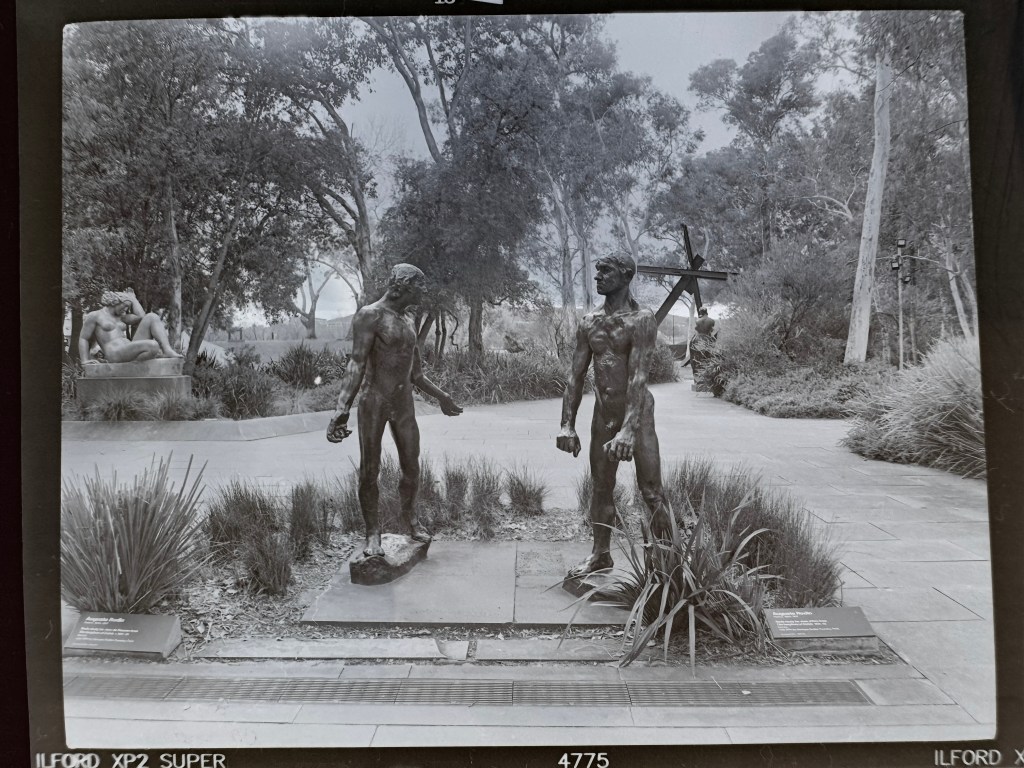
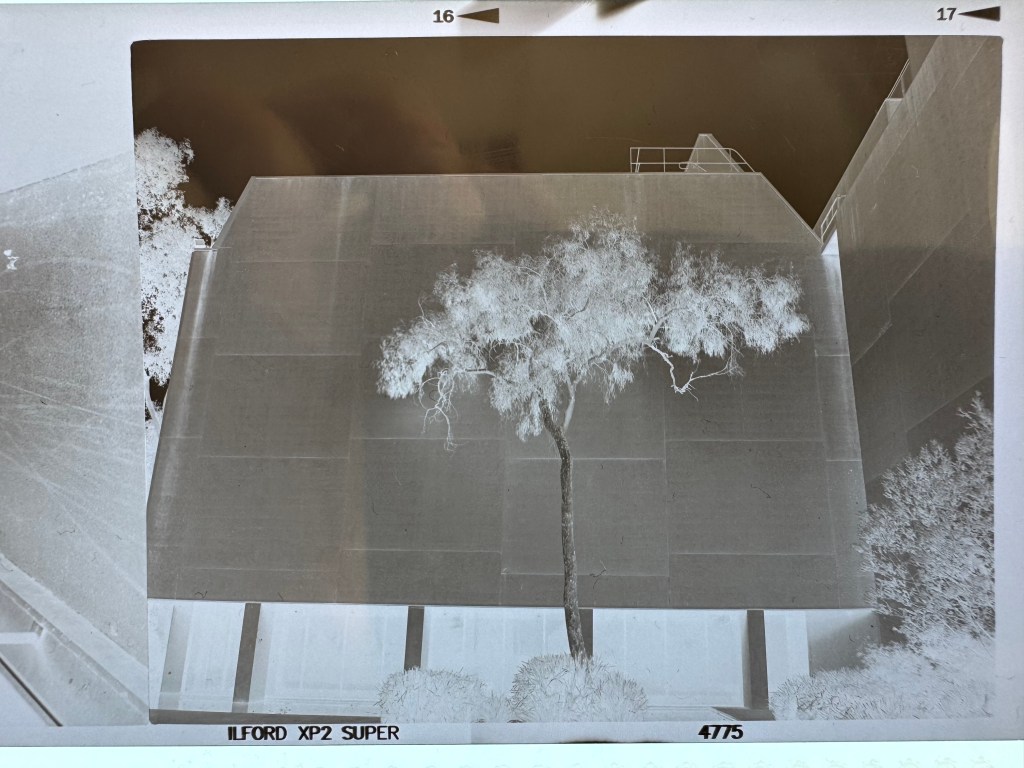
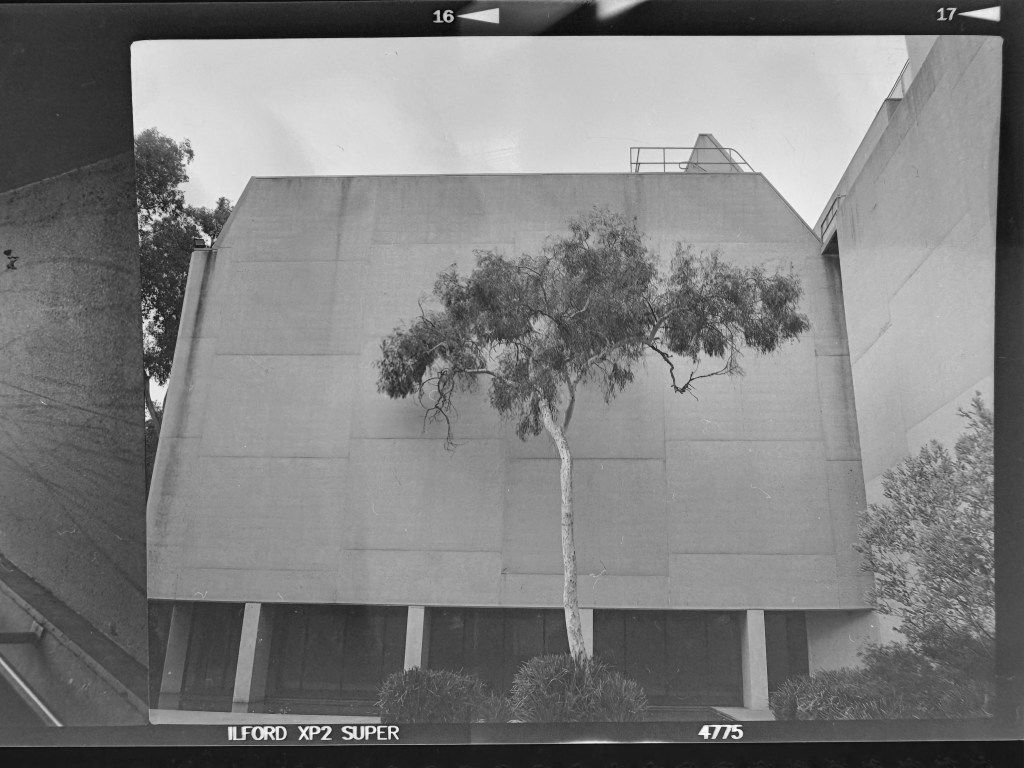
But at above quick glance, the camera appears to focus okay, no obvious light leaks. As you can see in the last set, it doesn’t look like I wound the film back enough, as one frame on the left is right up against the one in focus.
There is one issue – the film back didn’t shut properly, so it wouldn’t wind on my film properly. I have to double/triple check to make sure the thing is latched.
Other than that, it’s a camera you have to slow down and think a little, add more ritual to each shot. Get a meter reading, make sure it’s level on the tripod, eye ball the focus distance, take another meter reading, set the shutter speed, prime the shutter, remove the dark slide and then take the shot.
On top of the camera is a Mamiya Press viewfinder for the press cameras, which had a similar lens. I does not focus, despite having markings for distance, but it is slightly better than relying on the sports finder arrangement. I am looking forward to getting another one or two film backs, particularly the 6×9 ones, since I can load them with different film and then provides the opportunity to take a same shot with different film.
More shots soon.
- There are possibilities here, with enough patience, math, a CNC mill, and a cadre of film/engineering/optics nerds ↩︎

 The Screaming Wall
Leave a comment