
Note: Originally I wrote most of this at the start of the year, but it took several pauses because, I wanted to not sit in front of the screen. Working from home at a job you don’t like, makes every screen seem like ‘the bad screen’, and I want nothing more than to get out of my house. Anyway, on with the piece.
GAS – Gear Acquisition Syndrome is a problem for any enthusiast. For camera gear it’s indicative of trying to find the right kit for the perfect shot. I don’t think I have it. I tend to agonise over purchases. It can take me months to decide on a new purchase. I’ll check and compare, until either someone else buys it, it isn’t suitable, or I buy it.
This agonising comes about weighing up if it’s going to fit an empty place in my collection, or solve a problem. So with that in mind, it was time for a new tripod.
iFootage TC9 Gazelle Tripod
I already had two tripods, but they’re both lightweight travel ones. One is a Promaster brand one, and the other a Peak Design. The Promaster tripod has those twist lock legs. It worked okay, but I had issues with it and legs not locking in cold weather when I was shooting an eclipse. I nearly lost the camera twice. So, when the time was right, I bought a Peak Design travel tripod. It’s a good portable tripod, versatile and sturdy enough for a lot of applications. But the moment a stiff breeze breathed, it made any long exposure into a jittery mess. There was also an issue with using the Horseman Convertible. The locking ring for the balance ball never seemed to lock with enough if I was swapping out the film backs for the convertible. After a bit of digging around I ended up picking up an iFootage TC9. It’s a big carbon fibre thing that when fully extended stands a bit taller than me, lever-locking legs. It feels nice and sturdy. It was also about three hundred dollars off the retail price. I bought it with a basic tripod head, which turned out to be pretty good, passing the film back swap test.
But I didn’t use it a whole lot, because shortly after, I got a new tripod head.
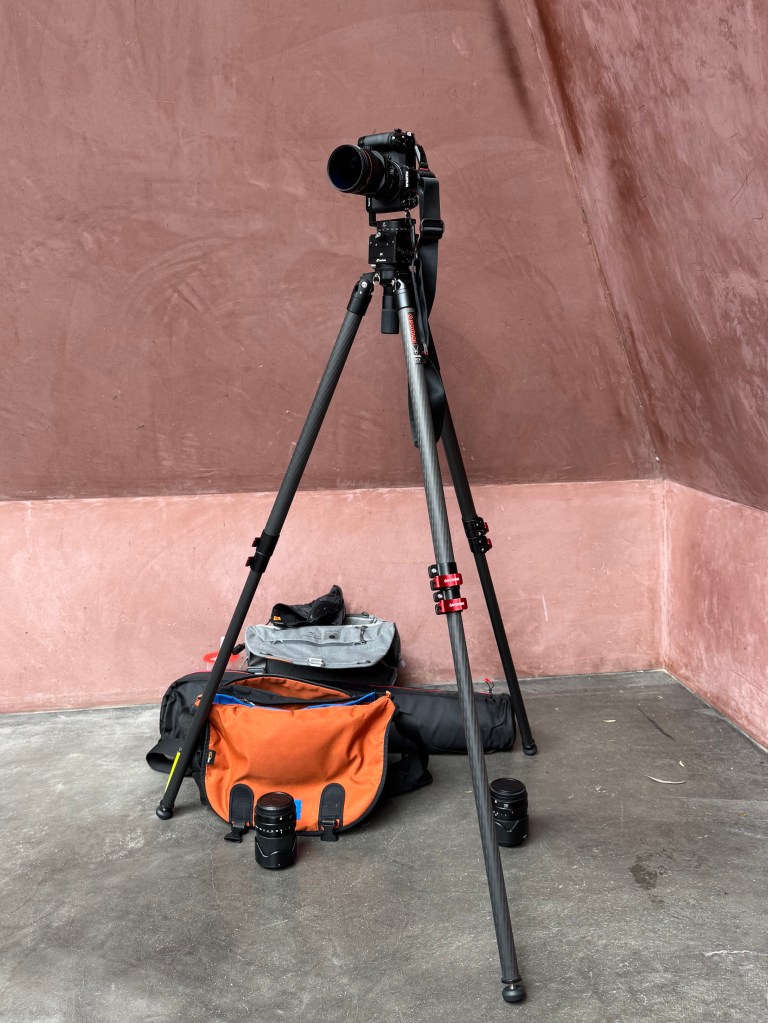
Leofoto G6 Geared Head
Leofoto made a geared tripod head that looks like the coveted Arca-Swiss Cube, but about one third to one half of the price. The point of a geared head is for precise movement, and a maximum amount of stability. I’ve never played with an Arca-Swiss, but the Leofoto’s movements are nice and smooth. It can be set in such a way that the plate can be 90 degrees for portraits, but it would be better to get an L-plate instead for that purpose. And I’m looking forward to working on more shots with it.
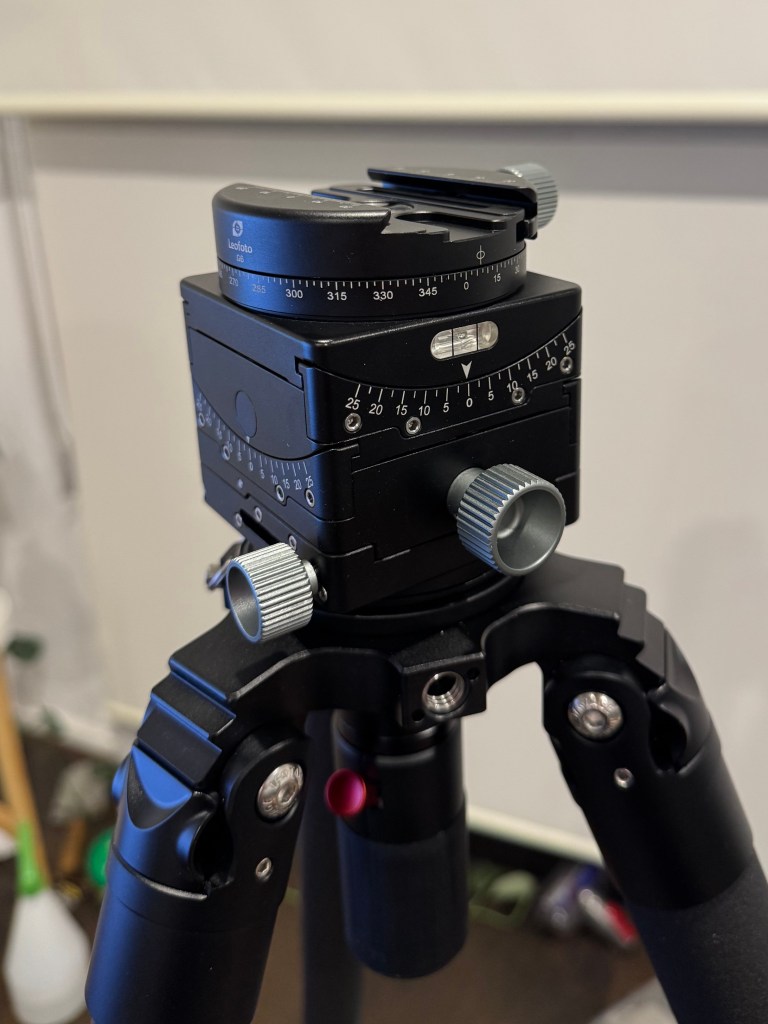
Canon TS-E 24mm lens
I watched this lens on Camera Exchange for about a year before putting money down on it as a nice little present for myself at the end of the year. I picked it up with an adapter so that I could connect it to the GFX. The GFX has the firmware to deal with third-party lenses. There’s a setting whether to adjust the camera’s sensor to 35mm/full frame lenses, or leave it at its original size. As the lens circle for this lens is wide, the tilt-shift lens can be used with most of its capabilities, or fully when the sensor is adjusted down. At medium format, the lens becomes wider than 24mm, and it can be tilted and shifted roughly +/-8 for tilting or shifting. And the lens becomes 24mm and used to its fullest, when the sensor is cropped down. Being a wide-angle lens its great for architectural or landscape photography, particularly where vertical or horizontal lines are needed to remain parallel. The only drawback is using the lens and the adapter chews through the battery.
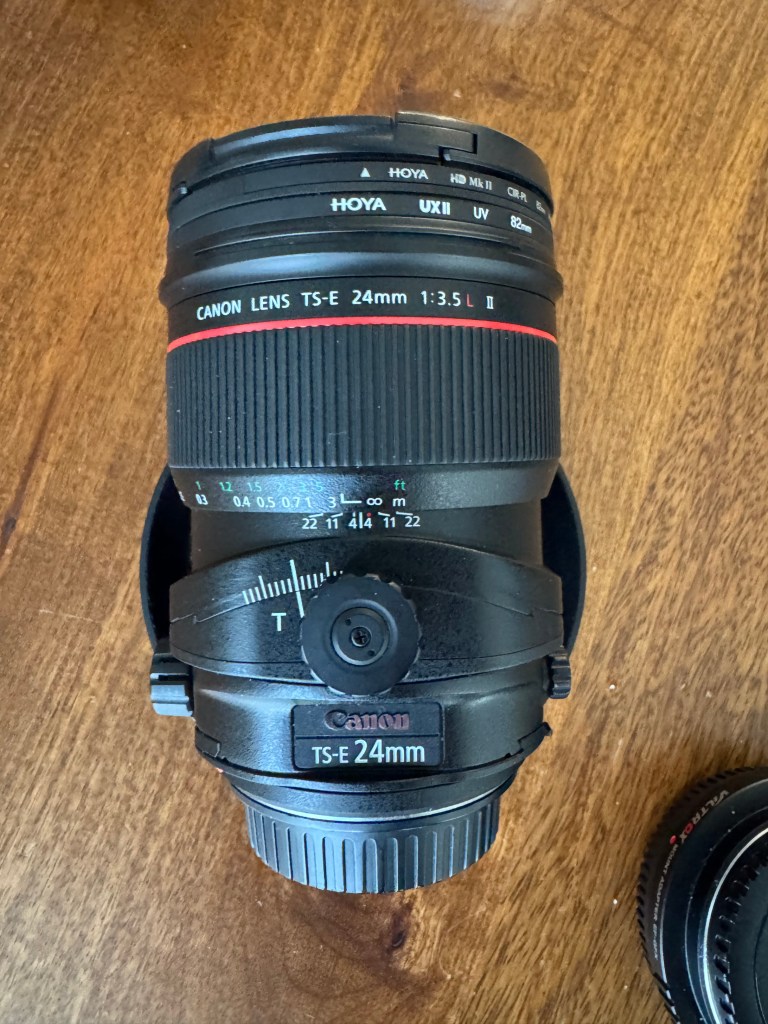
Horseman prism viewfinder
I bought this to help with critical focusing on the Horseman Convertible I bought a while back. It was part of a package deal through eBay, which was a rotating back for a Horseman 4×5 camera, the viewfinder and a 6×9 film back. Buying all three was cheaper than purchasing just the viewfinder and the film back separately, so it seemed like a decent deal.
Using the viewfinder for critical focusing requires that the operator set the shutter speed to bulb, and then hold down the shutter trigger to look through the lens. This is because the camera isn’t an SLR or rangefinder and operates more like a field camera. This will make it easier for a studio or landscape that requires critical focusing. The prism part can detach and it can be used like a simple piece of ground glass. So I’m looking forward to eventually using it.
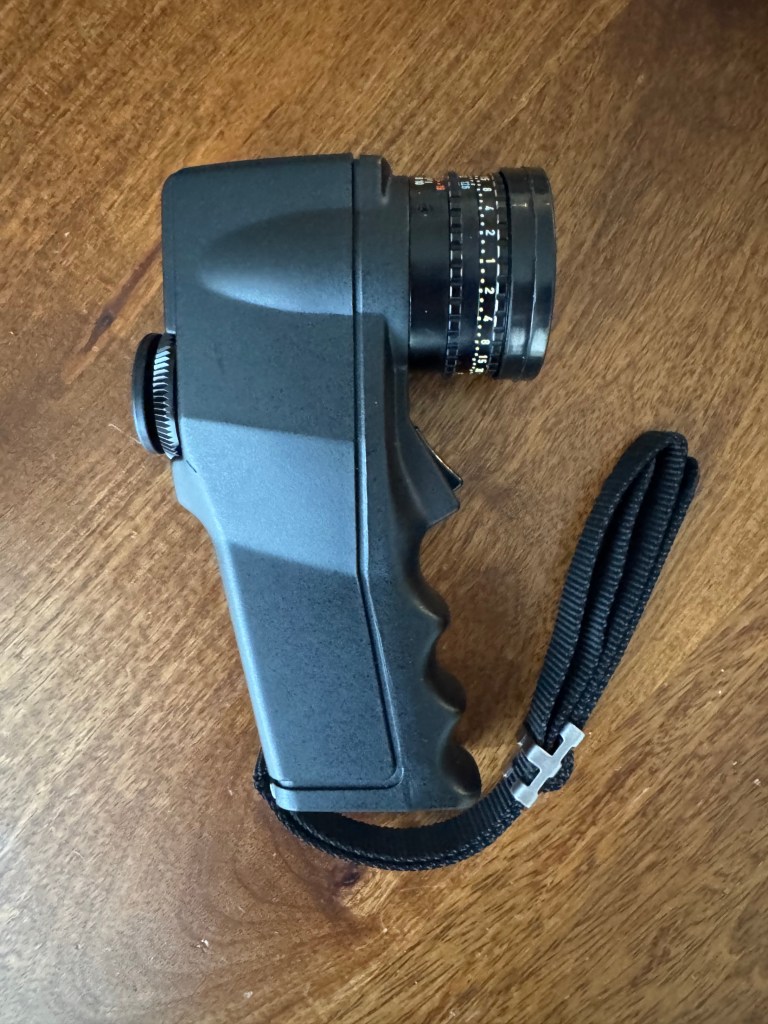
Pentax Spotmeter
I bought this spotmeter on a whim, which is rare. I was impatient in getting a Sekonic spotmeter and its price to drop. I haven’t used it much, as I’ve been focusing more on digital over film photography lately. I guess maybe I will when I’m on the road again. Which I don’t know when that will be, considering things happening around the globe….


Leave a Reply